
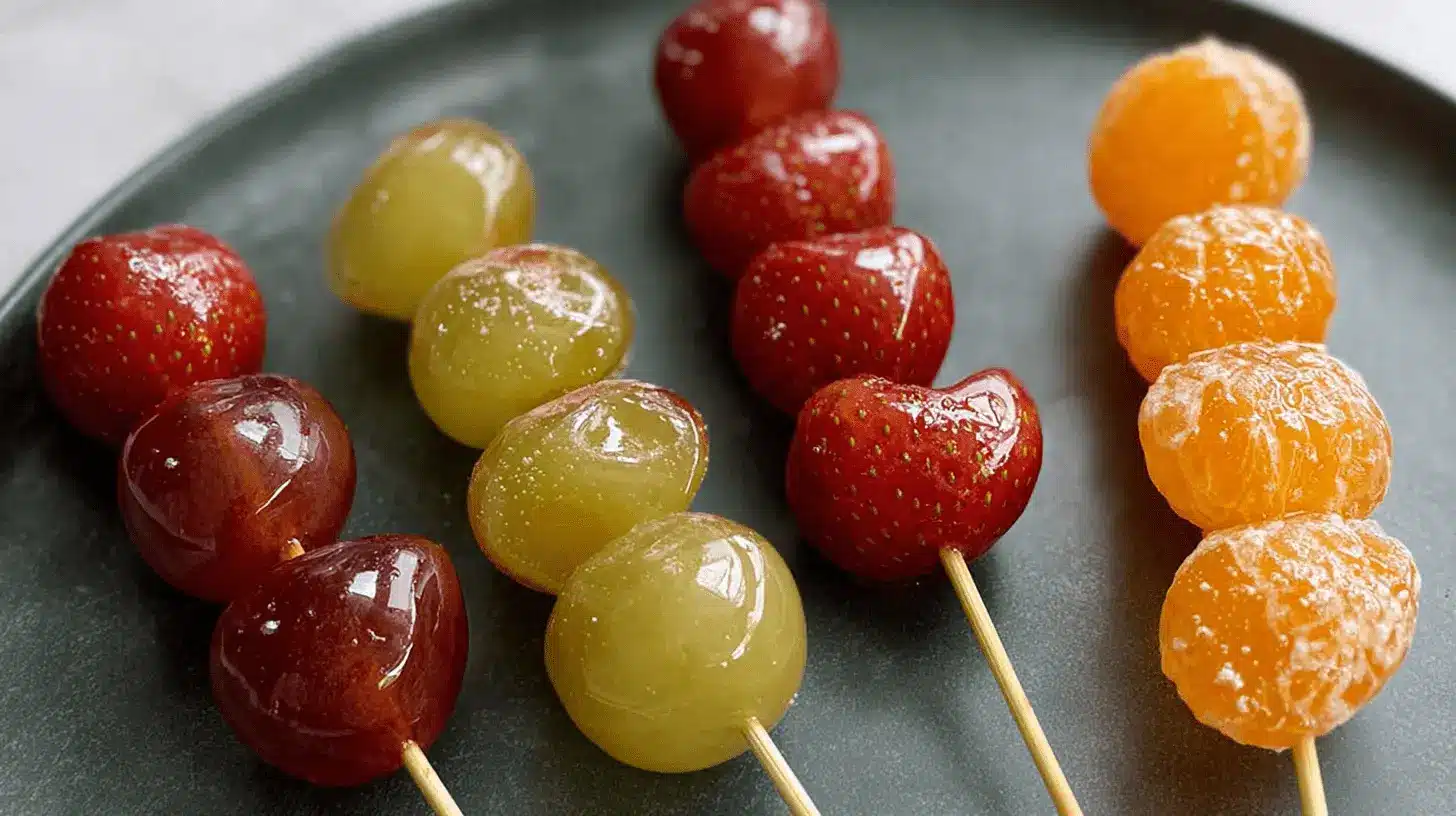
Get ready to create a truly enchanting treat! Our tanghulu recipe brings the magic of traditional Chinese candied fruit right into your kitchen. This vibrant and irresistible snack, known for its glassy, crunchy sugar shell and juicy fruit interior, is a beloved street food.
The history of tanghulu dates back over 800 years, originating as a potential medicinal remedy in the Song Dynasty before evolving into a popular street snack throughout China. Learn more about the history and cultural significance of tanghulu.
While it looks impressive, making it at home is surprisingly simple and incredibly rewarding. You’re about to discover how easy it is to whip up this delightful dessert!
Table of Contents
Why You’ll Love This Tanghulu Recipe
This sweet fruit snack is more than just a treat; it’s an experience! You’ll love preparing this tanghulu recipe for so many reasons:
- Satisfying Crunch: Enjoy the delightful, hard candy shell that shatters with every bite, revealing the fresh fruit inside.
- Sweet and Juicy Contrast: The crisp sugar perfectly complements the natural sweetness and juiciness of your chosen fruits.
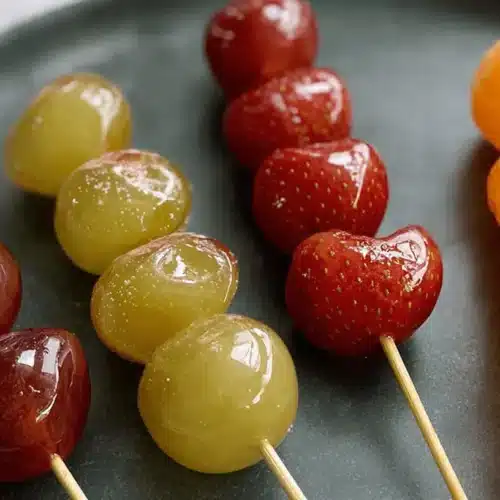
- Visually Stunning: The glossy coating and vibrant colors make these candied fruit skewers a beautiful centerpiece or gift.
- Fun and Unique: It’s a fantastic conversation starter and a memorable dessert that stands out from typical sweets.
- Perfect for Any Occasion: Whether for a special party, a unique homemade gift, or a delightful afternoon treat, it always impresses.
Ingredients
Creating this delightful candied fruit treat requires just a few simple ingredients, showcasing that sometimes less is truly more. This straightforward tanghulu recipe focuses on fresh fruit and a perfect sugar syrup.
- 1 pound fresh fruit (e.g., strawberries, mandarin slices, grapes, or a combination)
- 3 cups granulated white sugar
- 1 1/2 cups water
Notes & Substitutions
For the best results, selecting the right fruit is crucial. Always choose firm, ripe, and completely dry fresh fruit. Excess moisture on the fruit can interfere with the sugar coating. For the syrup, ensure you use plain granulated white sugar; other sugars can behave differently and might not achieve the desired hard crack stage. Feel free to experiment with various fruits like peeled kiwi slices, apple chunks, or even small crab apples for different flavors and textures.
Equipment
Having the right tools ready before you begin will make your tanghulu-making process smooth and stress-free.
- Medium stainless-steel pot
- Candy or digital thermometer
- Wooden skewers or chopsticks
- Large bowl for ice water
- Parchment paper-lined baking sheet
How To Make Tanghulu Recipe
Making your own delicious tanghulu recipe is a straightforward process when you follow these steps carefully. The key is preparation and precision!
Prepare the Fruit
Start by preparing your fruit to ensure it’s ready for its sweet coating.
- Wash all of your chosen fruit thoroughly by letting it sit in cold water for a few minutes. This helps remove any impurities.
- Drain the fruit completely and then meticulously pat it dry with paper towels or a clean kitchen towel. Every bit of moisture must be removed to prevent sugar crystallization and ensure a perfectly crisp coating.
- Carefully thread the dry fruit onto wooden skewers or chopsticks. Aim for one to three pieces of fruit per skewer; this makes dipping much easier.
- Once threaded, arrange the skewers on a parchment paper-lined baking sheet. This provides a non-stick surface for the finished tanghulu.
Make the Sugar Syrup
The sugar syrup is the heart of any tanghulu recipe, so pay close attention to the temperature.
- In your medium stainless-steel pot, combine the granulated sugar and water.
- Crucially, do NOT stir the mixture once combined. Stirring can cause sugar crystals to form, leading to a cloudy or grainy coating.
- Place the pot over medium heat and bring the mixture to a boil.
- Insert your candy or digital thermometer, ensuring the tip doesn’t touch the bottom of the pot.
- Continue cooking without stirring, monitoring the temperature carefully. You want the syrup to reach exactly 300°F (150°C), which is known as the hard crack stage for candy making. This typically takes about 15-20 minutes.
Dip and Harden
Working quickly is essential once the syrup reaches the correct temperature.
- Immediately remove the pot of hot sugar syrup from the heat as soon as it hits 300°F.
- Swiftly dip each fruit skewer into the hot syrup. Rotate the skewer to ensure the fruit is fully and evenly coated with a thin layer of the glossy sugar.
- Immediately after dipping, transfer the coated fruit skewer into a large bowl filled with ice water. Submerge it briefly for just a few seconds; this rapid cooling helps the candy coating set instantly into a crisp, glassy shell.
- Once the coating has hardened, remove the skewer from the ice bath and place it onto the parchment-lined baking sheet.
- Repeat this process quickly with all remaining fruit skewers. The sugar syrup will start to thicken and harden as it cools, so efficiency is key.
- Serve your beautiful, crunchy tanghulu immediately for the very best experience. The outer candy tends to soften over time.
Pro Tips & Troubleshooting
Achieving the perfect crunchy coating for your candied fruit skewers comes down to a few key techniques and avoiding common pitfalls. Our recipe is designed to be simple, but these tips will make it foolproof.
- Prep Ahead: Have all your fruit prepared, skewers ready, ice bath set up, and baking sheet lined before you start heating the sugar. This allows you to work quickly.
- Dry Fruit is Key: Even a tiny bit of moisture on the fruit can cause the sugar to crystallize or prevent it from adhering properly. Pat it until it’s bone dry!
- Stainless Steel Pot: This material provides even heat distribution, preventing hot spots that can burn the sugar.
- Accurate Thermometer: A reliable candy or digital thermometer is truly essential. Eyeballing the temperature can lead to sticky or burnt sugar.
- No Stirring! As mentioned, stirring the sugar syrup after the sugar has dissolved encourages crystallization, leading to a cloudy and grainy coating.
- Work Quickly: Once the syrup reaches 300°F, it cools and hardens fast. Be prepared to dip and cool without delay.
For a comprehensive understanding of sugar stages in candy making, including the hard crack stage, you can refer to detailed guides on candy temperature stages.
Common Mistakes to Avoid
- Sticky, Chewy Coating: This usually happens because the sugar syrup didn’t reach the full 300°F (hard crack stage). Always use a thermometer.
- Cloudy Coating: Often caused by stirring the sugar syrup, or if the fruit wasn’t perfectly clean and dry. Impurities can trigger crystallization.
- Burnt Sugar: This occurs when the heat is too high, or the syrup is left on the stove too long without a thermometer. Burnt sugar has a bitter taste.
- Sugar Crystallization: Stirring the syrup, using a dirty pot, or having water splash back into the syrup from the sides of the pot can all cause the sugar to seize up.
Serving, Storage, & Variations
This delightful tanghulu recipe offers versatility in how you enjoy it and even how you can customize its flavors.
Serving Suggestions
For the absolute best texture and crunch, serve your tanghulu immediately after it has hardened. The glassy coating is at its crispest right away. It makes a delightful individual snack or can be beautifully arranged on a platter as an impressive dessert offering for guests. These vibrant skewers are always a hit!
Storage Tips
While tanghulu is definitely best eaten fresh, you can store it briefly. Place the candied fruit in an airtight container and refrigerate for up to 1-2 days. Be aware that the sugar coating will likely absorb some moisture from the air and fruit over time, causing it to soften and lose some of its signature crunch.
Flavor Variations
Feel free to get creative with your tanghulu!
- Food Coloring: Add a few drops of food coloring to the sugar syrup during cooking for a fun, vibrant twist.
- Spiced Syrup: Experiment by infusing the syrup with a cinnamon stick, a few star anises, or a pinch of ground cardamom for a subtle aromatic touch. Remove spices before dipping.
- Salty Twist: A tiny pinch of flaky sea salt sprinkled over the freshly dipped, still-wet candy coating can offer a delightful sweet and salty contrast.
Nutrition Information
This tanghulu recipe is a sweet treat, and here’s an estimated nutritional breakdown per serving.
| Nutrient | Amount |
|---|---|
| Calories | 642 kcal |
| Carbohydrates | 166 g |
| Protein | 1 g |
| Fat | 1 g |
| Saturated Fat | 0.01 g |
| Sodium | 12 mg |
| Potassium | 104 mg |
| Fiber | 2 g |
| Sugar | 162 g |
| Vitamin A | 342 IU |
| Vitamin C | 2 mg |
| Calcium | 10 mg |
| Iron | 0.4 mg |
Disclaimer: Nutrition information is an estimate only and may vary based on specific ingredients and preparation methods.
FAQ
Got questions about making your perfect candied fruit skewers? We’ve got answers for this delicious tanghulu recipe.
Why is my tanghulu not hardening?
Your sugar syrup likely didn’t reach the crucial 300°F (hard crack stage). A candy thermometer is essential for accuracy.
Why did my sugar crystallize?
This typically happens from stirring the sugar syrup, having impurities in the pot or on the fruit, or using a non-stainless steel pot.
What kind of fruit is best for tanghulu?
Firm, low-moisture fruits like strawberries, grapes, mandarin slices, kiwi, and crab apples work wonderfully.
How long does tanghulu last?
It’s best eaten within an hour of making for optimal crunch, but can be stored in the fridge for 1-2 days, though the coating will soften.
Can I make tanghulu without a candy thermometer?
It’s risky, but you can use the cold water test: drop a small amount of syrup into ice water. If it forms brittle threads that snap, it’s ready.
Conclusion
There’s nothing quite like the joy of biting into a perfectly crunchy, sweet piece of homemade tanghulu. This simple yet impressive tanghulu recipe transforms fresh fruit into an extraordinary treat with just a few ingredients and precise steps. It’s a wonderful way to bring a touch of street food delight into your home and impress everyone with your candy-making skills! Give this unique candied fruit a try, and you’ll be amazed at how easy and rewarding it is! We’d love to hear about your experience, so please leave a comment and rating below.
Tanghulu Recipe: Crunchy Candied Fruit Delight
Equipment
- stainless steel pot
- skewers
- bowl with ice
- Baking Sheet
Ingredients
Main Ingredients
- 1 pound fruit (I used a combination of strawberries, mandarin slices and grapes)
- 3 cups granulated white sugar
- 1 1/2 cups water
Instructions
Preparation
- Wash all fruit by letting it sit in cold water for a few minutes, then drain and thoroughly pat dry.
- Add one to three pieces of fruit per skewer, as too many will make it difficult to dunk in sugar.
Cooking
- In a stainless steel pot, combine sugar and water without stirring. Cook over medium heat for 15-20 minutes until it reaches exactly 300F (hard ball stage).
- Immediately dunk the skewered fruit into the melted sugar, then transfer it into a bowl with ice, and finally place it on a baking sheet. Repeat for all remaining fruit.
Serving
- Eat immediately after preparation, as the outer candy coating tends to soften quickly if left to sit.