
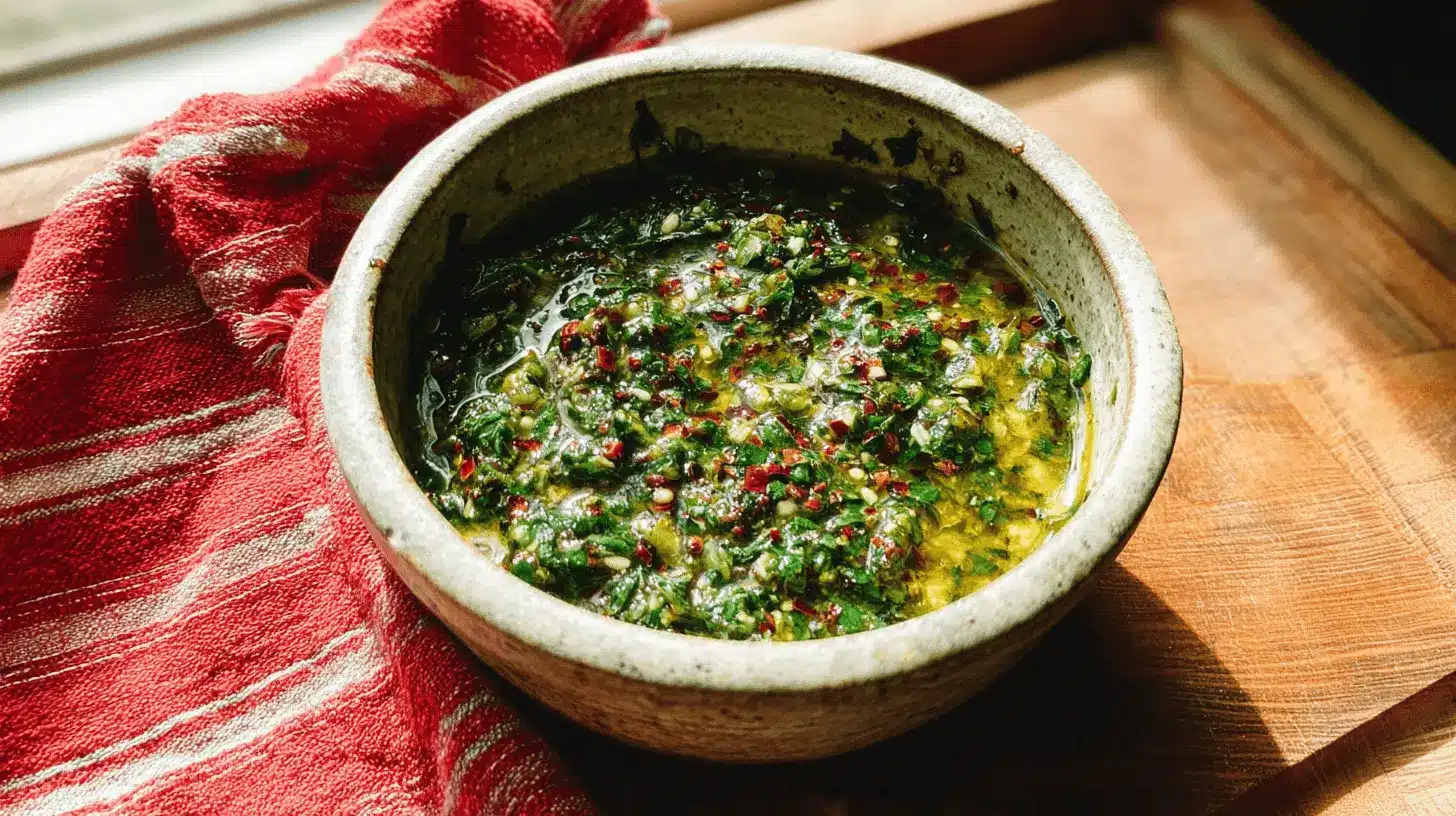
Welcome to the vibrant world of Argentinian flavors! This classic homemade chimichurri recipe is a true game-changer, bursting with fresh herbs, tangy vinegar, and a subtle kick of spice. It’s an incredibly versatile sauce that brightens up almost any dish, from grilled chicken to roasted vegetables.
Tracing its roots back to 19th-century Argentina, chimichurri is more than a sauce; it’s a reflection of national identity and culinary tradition. Learn more about the fascinating history of chimichurri.
You’ll love how easy it is to prepare, bringing a gourmet touch to your table with minimal effort. Get ready to transform your meals with this zesty, herbaceous condiment.
Table of Contents
Why You’ll Love This Chimichurri
This easy chimichurri recipe will quickly become a staple in your kitchen for so many reasons:
- Effortlessly Simple: Just a few minutes and a food processor (or a sharp knife) are all you need.
- Bursting with Flavor: Enjoy a fresh, tangy, and garlicky taste that invigorates your palate.
- Incredibly Versatile: It pairs perfectly with countless dishes, elevating every bite.
- A Healthy Choice: This vibrant condiment is packed with fresh ingredients and beneficial fats.
- Better Than Store-Bought: Experience a homemade taste that truly shines above any jarred alternative.
Ingredients
Gather these fresh, simple ingredients to create your own chimichurri recipe:
- 0.75 cups (178 ml) fresh cilantro
- 0.5 cups (118 ml) fresh flat-leaf parsley
- 0.25 white onion (30 g) white onion, roughly chopped
- 0.5 cups (120 ml) extra virgin olive oil
- 2 tablespoons (30 ml) red wine vinegar
- 2 cloves fresh garlic, minced
- 0.5 tsp salt
- 0.25 tsp black pepper
- Pinch of red pepper flakes
Notes & Substitutions
Always prioritize fresh, high-quality herbs for the best flavor in this vibrant chimichurri. You can substitute red wine vinegar with apple cider vinegar or fresh lemon juice for a different tang. Adjust the garlic intensity by adding more for a bolder flavor, or less for a milder sauce. Feel free to increase or decrease red pepper flakes to suit your preferred spice level. For an extra layer of flavor, consider adding a small diced shallot alongside the onion.
Equipment
Making this simple chimichurri is straightforward with just a few basic tools:
- A food processor or a very sharp chef’s knife for chopping.
- A cutting board for preparing your fresh ingredients.
- Measuring cups and spoons to ensure precise ingredient amounts.
- An airtight container for convenient storage of your delicious sauce.
Instructions
Let’s create this vibrant chimichurri recipe with these easy-to-follow steps:
- Prepare Ingredients: Begin by washing your fresh cilantro and flat-leaf parsley thoroughly. Pat them completely dry to prevent a watery sauce. Peel and roughly chop the white onion and garlic cloves.
- Combine in Processor: Add the washed cilantro, parsley, roughly chopped onion, olive oil, red wine vinegar, minced garlic, salt, black pepper, and a pinch of red pepper flakes to a small food processor.
- Pulse to Chop: Pulse the ingredients several times until the herbs and onion are finely chopped. The goal is a textured sauce, not a smooth purée, so avoid over-processing. You should still see distinct pieces of herbs.
- Check Consistency: Scrape down the sides of the food processor bowl with a spatula to ensure all ingredients are incorporated evenly.
- Season to Taste: Spoon a small amount of the chimichurri onto a clean spoon and taste it. Adjust the seasoning as needed; you might want to add a bit more salt, pepper, or a touch more red wine vinegar for extra tang.
- Meld Flavors: Transfer the finished chimichurri from the food processor to a small bowl. For optimal flavor development, let the sauce rest at room temperature for at least 10 minutes before serving. This allows the herbs and spices to fully infuse the oil and vinegar.
- Serve or Store: Your fresh herb sauce is now ready to enjoy! Use it immediately over your favorite dishes or prepare it for later use according to the storage instructions. This simple chimichurri is best enjoyed fresh, but its flavors will continue to develop over time in the refrigerator.
Pro Tips & Troubleshooting
Mastering your chimichurri recipe is easy with these helpful tips. Achieve perfect herb texture by finely chopping rather than puréeing; visible pieces are key. Balance the acidity with the olive oil to avoid an overly tart sauce; a good quality oil makes a difference. Adjust the spice level confidently by adding more red pepper flakes for heat or omitting them for a milder version.
Enhance the flavor significantly by allowing the sauce to rest for at least 10-15 minutes before serving, allowing the ingredients to meld. Avoid over-processing in a food processor, as this can turn herbs bitter or pasty; instead, use short pulses for best results. Prevent browning herbs by drying them completely before chopping and storing the sauce properly. If your chimichurri tastes bland, add a pinch more salt or a splash of vinegar. If it’s too tart, drizzle in a bit more olive oil to balance.
Serving, Storage, and Variations
This versatile chimichurri sauce is a fantastic addition to many meals.
Serving Suggestions
- Grilled Delights: Perfect with grilled steak or chicken, bringing a bright, fresh counterpoint.
- Roasted Vegetables: Drizzle generously over roasted potatoes, asparagus, or bell peppers for extra zest.
- Seafood Pairing: Serve with pan-seared fish or grilled shrimp to elevate the natural flavors.
- Breakfast Boost: Enhance scrambled eggs or spread it on avocado toast for a vibrant start to your day.
- Savory Spread: Use as a delicious sandwich spread or a flavorful dip for crusty bread or vegetable sticks.
Storage Instructions
- Refrigerate: Store your homemade chimichurri in an airtight container in the refrigerator for up to 3-5 days.
- Oil Separation: It’s normal for the oil to separate; simply give it a good stir before serving.
- Shelf Life: While it lasts a few days, the freshest flavor is typically within the first 2-3 days.
- Freezing: For longer storage, freeze portions in ice cube trays. Once solid, transfer the cubes to a freezer-safe bag for up to 2-3 months.
Variations
- Herb Twist: Add different fresh herbs like a touch of mint, fresh oregano, or basil for unique flavor notes.
- Citrus Boost: Introduce a squeeze of fresh lemon or lime juice for an extra bright, tangy kick.
- Spice It Up: Incorporate finely diced fresh jalapeño or serrano peppers for a bolder heat profile.
- Smoky Depth: Stir in a pinch of smoked paprika for a warm, earthy flavor dimension.
- Creamy Version: Blend in a quarter of an avocado to create a wonderfully creamy and rich sauce.
Nutrition Information
This chimichurri offers a flavorful way to add healthy ingredients to your meals. A single serving provides essential healthy fats and minimal carbohydrates.
Research from sources like Harvard’s Nutrition Department highlights how extra virgin olive oil, a key ingredient in chimichurri, can contribute to heart health.
| Nutrient | Amount per 2 tablespoons |
|---|---|
| Calories | 100 |
| Sugar Content | 1g |
| Sodium Content | 150mg |
| Fat Content | 90g |
| Saturated Fat | 10g |
| Unsaturated Fat | 80g |
| Trans Fat | 0g |
| Carbohydrate | 3g |
| Fiber Content | 2g |
| Protein Content | 1g |
| Cholesterol | 0g |
It’s also naturally gluten-free and vegan, making it suitable for various dietary needs.
FAQ
What is chimichurri sauce?
Chimichurri is a vibrant, uncooked herb sauce originating from Argentina. It’s typically made with fresh parsley, garlic, olive oil, vinegar, and red pepper flakes, serving as a popular condiment for grilled meats.
Can I make chimichurri in advance?
Absolutely! This chimichurri recipe benefits from a little resting time, making it perfect for meal prep. Prepare it a few hours or even a day ahead for the best flavor, allowing the ingredients to meld.
What dishes pair well with chimichurri?
This versatile sauce truly shines with grilled steak, chicken, or fish. It’s also delicious drizzled over roasted vegetables, mixed into rice, or spread on sandwiches for an extra flavor punch.
Why is my chimichurri bitter?
Bitterness often comes from over-processing the garlic or herbs, especially if using a food processor for too long. Ensure you pulse briefly to just chop the ingredients, not purée them.
Is chimichurri spicy?
The traditional chimichurri recipe has a very mild heat from red pepper flakes. You can easily adjust the spice level by adding more or fewer flakes to match your preference.
Conclusion
This simple chimichurri recipe is a testament to how fresh ingredients and minimal effort can create something truly extraordinary. Its bright, zesty, and herbaceous flavors offer a fantastic way to elevate everyday meals and impress your loved ones. Whether you’re grilling, roasting, or simply looking to add a burst of freshness, this homemade chimichurri is your perfect companion. Go ahead, give this vibrant sauce a try and enjoy the incredible taste of Argentina in your own kitchen!
The Best Homemade Chimichurri Recipe
Equipment
- small food processor
Ingredients
Chimichurri Ingredients
- 0.75 cups fresh cilantro 178 ml
- 0.5 cups fresh flat-leaf parsley 118 ml
- 0.25 white onion 30 g
- 0.5 cups olive oil 120 ml
- 2 tablespoons red wine vinegar 30 ml
- 2 cloves garlic, minced
- 0.5 tsp salt
- 0.25 tsp black pepper
- Pinch red pepper flakes
Instructions
Make the Chimichurri
- Add all chimichurri ingredients including cilantro, parsley, onion, olive oil, red wine vinegar, garlic, salt, pepper, and red pepper flakes to a small food processor.
- Pulse the mixture several times until the herbs are finely chopped, ensuring a visible texture rather than a smooth purée.
- Taste the chimichurri and adjust the seasoning with additional vinegar or salt as needed.
To Serve
- Serve the chimichurri immediately or refrigerate it for up to 3 days; remember to bring it to room temperature and stir before serving.