
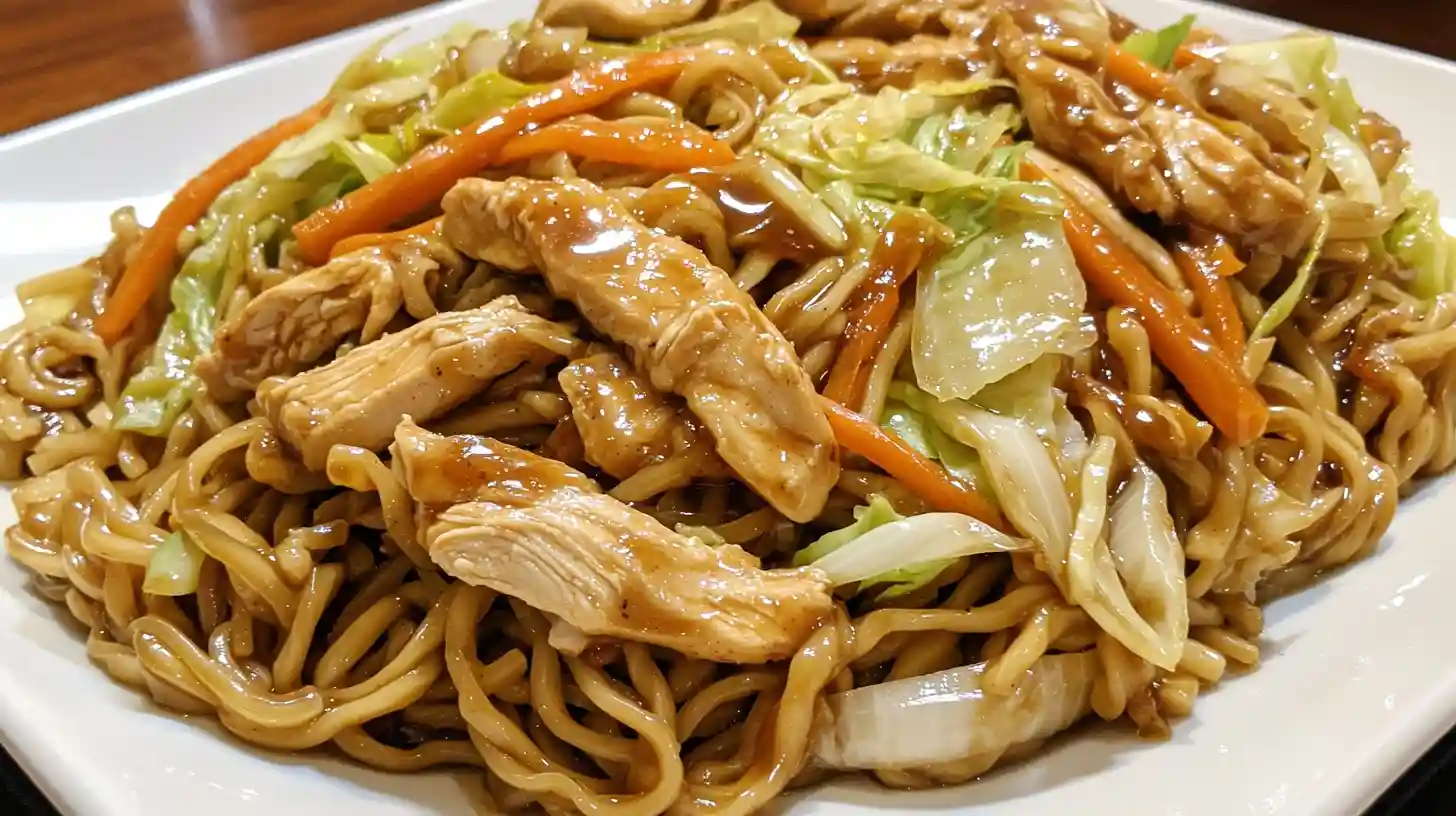
Welcome to a truly delightful and straightforward recipe: chicken yakisoba! This classic Japanese stir-fry noodle dish is a favorite for good reason. It’s packed with tender chicken, crisp vegetables, and savory noodles, all coated in a rich, tangy sauce. This article will guide you through creating a perfect chicken yakisoba right in your own kitchen, even if you’re a beginner. Get ready to enjoy a fantastic meal!
Table of Contents
Why You’ll Love This Recipe
You’ll adore this chicken yakisoba recipe for so many reasons:
- Fast and Easy Weeknight Meal: It comes together quickly, making it ideal for busy evenings when you need a satisfying dinner without much fuss.
- Customizable with Available Ingredients: Easily adapt it using whatever vegetables or proteins you have on hand. It’s incredibly versatile!
- Balanced and Wholesome: Enjoy a meal with a great mix of carbohydrates, lean protein from the tender chicken, and plenty of fresh vegetables.
- Kid-Friendly and Adaptable: The mild, savory flavors appeal to many, and you can adjust the veggies to suit even the pickiest eaters.
- Irresistible Flavors: Experience perfectly tender chicken and noodles coated in a savory, umami-rich sauce that everyone will crave.
Ingredients
Gathering your ingredients is the first step to creating this delicious chicken yakisoba. We’re focusing on a single-serving portion to make cooking for one simple and quick.
- 2 green cabbage leaves
- ¼ onion (about 3.5 oz / 100 g)
- 4-inch carrot (about 2 oz / 60 g; bottom end close to the tip)
- 1 boneless, skinless chicken thigh (about 5 oz / 142 g)
- ⅛ tsp Diamond Crystal kosher salt
- ⅛ tsp freshly ground black pepper
- 1 Tbsp neutral oil (like canola or vegetable)
- 1 serving yakisoba noodles (Myojo brand is excellent)
- 1 serving yakisoba sauce (often comes with the noodles)
Notes and Substitutions
These helpful tips ensure your chicken yakisoba turns out perfectly every time.
- Chicken: Boneless, skinless chicken thighs stay wonderfully moist and flavorful. Chicken breast works too; just be careful not to overcook it.
- Noodles: Fresh yakisoba noodles are best, often found in the refrigerated section. Frozen yakisoba noodles are a great alternative. For gluten-free, look for gluten-free yakisoba noodles or rice noodles.
- Sauce: Many yakisoba noodle packets include a sauce pouch. If not, bottled yakisoba sauce is readily available. You can also make a simple homemade version by combining soy sauce (use low-sodium or gluten-free soy sauce if desired), Worcestershire sauce, oyster sauce (or a vegetarian alternative), ketchup, and a touch of sugar.
- Vegetables: Feel free to add bell peppers, broccoli florets, or snap peas.
Equipment
You don’t need fancy tools to make great chicken yakisoba. Here’s what will help:
- Wok or Large Skillet: A 10-inch or larger carbon steel frying pan, cast-iron skillet, or a griddle works beautifully. The key is a wide surface for stir-frying.
- Sharp Knife: Essential for clean and efficient vegetable and chicken prep.
- Cutting Board: For safe ingredient preparation.
- Spatula or Tongs: To stir-fry and toss ingredients effectively.
How To Make Chicken Yakisoba
Creating this flavorful chicken yakisoba is a straightforward process. Follow these steps for a perfect dish every time.
Prep Work
Precise preparation ensures your cooking process flows smoothly, leading to the best chicken yakisoba.
- Cut 2 green cabbage leaves into bite-sized pieces, about 1-inch (2.5 cm) squares.
- Cut ¼ onion into ¼-inch (6-mm) slices.
- Cut 4 inches of carrot into 2-inch slabs, then cut them into 2-inch (5-cm) julienned strips.
- Cut 1 boneless, skinless chicken thigh along the grain into ¾–1 inch (2–2.5 cm) strips. Then, angle your knife back diagonally and slice the strips crosswise into ¾–1 inch (2–2.5 cm) squares. This “sogigiri” cutting technique creates flat pieces of equal thickness and more surface area, so they cook faster and absorb seasonings better.
- Sprinkle the chicken pieces evenly with ⅛ tsp Diamond Crystal kosher salt and ⅛ tsp freshly ground black pepper.
- Remove the wrapper from 1 serving yakisoba noodles. Place them on a microwave-safe plate and cover with a damp paper towel. Heat in the microwave until just warm, about 30 seconds. Gently loosen the noodles with your hands. Pre-steamed noodles come pressed into a square; separating them prevents breakage and makes tossing easier.
Cooking Process
Now for the exciting part: cooking your delicious chicken yakisoba!
- Heat a large skillet (a 10¼-inch carbon steel frying pan works wonderfully), wok, or griddle on medium-high heat. When it’s hot, add 1 Tbsp neutral oil.
- Add the seasoned chicken and sliced onion to the pan in a single layer.
- Stir-fry with a spatula until the chicken is no longer pink, about 2 minutes. Then, add the cabbage and carrot. Toss to combine and allow any steam to evaporate. Give the ingredients direct contact with the hot cooking surface to keep things dry and develop a nice char.
- Continue to cook until the veggies are tender-crisp. Then, add the warmed noodles to the pan.
- Toss everything with tongs to combine, allowing any remaining steam to escape. Fry the noodles for another minute or two until fully heated through.
- Add 1 serving yakisoba sauce that comes in your noodle package. If you don’t have a sauce packet, add bottled or homemade yakisoba sauce, to taste.
- Toss everything well to thoroughly coat the noodles, chicken, and vegetables with the savory sauce. Cook for just another minute to let the flavors meld.
Plating
Serving your homemade chicken yakisoba is the final satisfying step.
- Serve the hot yakisoba directly onto an individual plate (a scallop-edged dinner plate looks lovely).
- Garnish with your favorite toppings like sliced green onions (scallions) or a sprinkle of toasted sesame seeds for added flavor and visual appeal. Enjoy immediately!
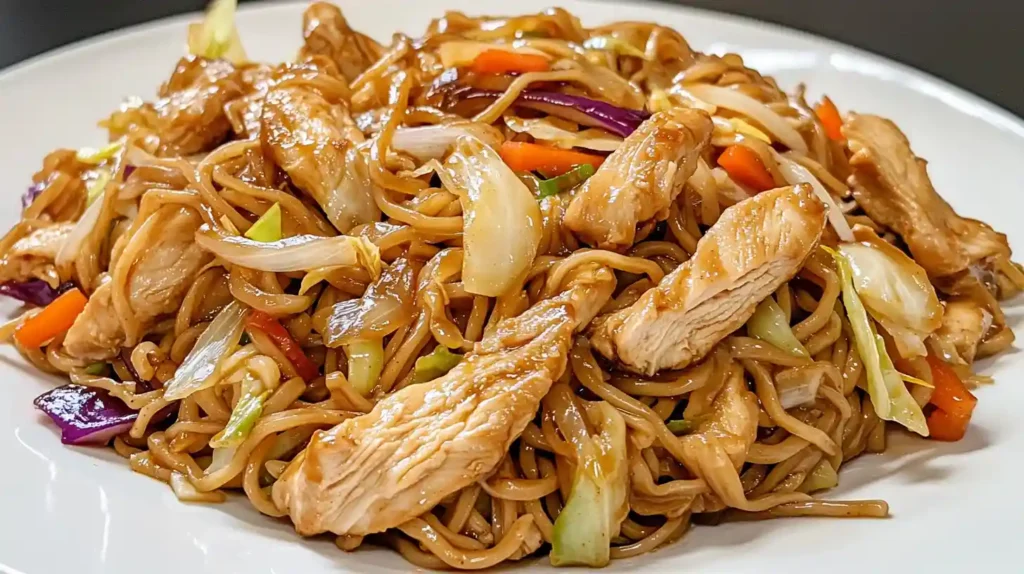
Pro Tips for the Best Yakisoba
Unlock the secrets to truly outstanding chicken yakisoba with these expert tips, ensuring a perfect outcome every time.
- Sogigiri Cut: Using the diagonal “sogigiri” cut for chicken creates uniform, thin pieces that cook quickly and absorb the savory flavors more efficiently. This quick stir ensures even cooking. For a deeper understanding, Just One Cookbook explains the nuances of Japanese cutting techniques like sogigiri.
- High Heat is Key: Always use medium-high to high heat for stir-frying. This allows ingredients to sear and develop a slight char rather than steam, which can lead to soggy results. An article in New Scientist delves into the science of ‘wok hei’ which is the distinct flavor achieved through high-heat stir-frying.
- Don’t Overcrowd the Pan: Cook in batches if necessary. An overcrowded pan lowers the temperature, preventing proper searing and making your noodles and vegetables soggy.
- Add Sauce Last: Incorporate the yakisoba sauce only at the end of cooking. This prevents it from burning and ensures all ingredients are perfectly coated with maximum flavor.
- Pre-Warm Noodles: Warming the noodles briefly in the microwave before adding them to the pan makes them easier to separate and prevents them from breaking during tossing.
Serving, Storing, and Variations
Enjoying your chicken yakisoba is easy, and so is managing leftovers or exploring new flavors.
Serve this delicious dish hot, straight from the pan. Top with chopped scallions, toasted sesame seeds, or a drizzle of Japanese mayonnaise for extra richness. For a touch of heat, add a sprinkle of shichimi togarashi (Japanese seven-spice blend) or a dash of chili oil.
Transfer any leftovers to an airtight container and store them in the refrigerator for up to 3 days. For longer storage, you can freeze your chicken yakisoba for up to a month. Thaw frozen yakisoba overnight in the refrigerator before reheating. Reheat gently in the microwave until warm, or warm it in a skillet over medium heat, adding a splash of water or extra sauce if it seems dry.
Variation Ideas
This versatile chicken yakisoba recipe is perfect for customization.
- Protein Swaps: Experiment with alternative proteins, such as sliced beef, shrimp, or firm tofu. Each adds a unique texture and flavor profile to the dish.
- Veggie Additions: Enhance your yakisoba with extra vegetables. Try adding thinly sliced bell peppers, snow peas, bean sprouts, or sliced mushrooms for more color and nutrients.
- Flavor Boosters: Kick up the taste with freshly grated ginger and minced garlic added with the chicken. A splash of rice vinegar or a spoonful of sriracha can also brighten the flavors. You could also explore making Yaki Udon by simply swapping yakisoba noodles for thick udon noodles.
Nutrition Information
Understanding the nutritional content of your homemade chicken yakisoba can be helpful for meal planning. Please remember these values are estimates and can vary based on the specific brands and quantities of ingredients you use.
| Nutrient | Amount |
|---|---|
| Calories | 687 kcal |
| Carbohydrates | 80 g |
| Protein | 43 g |
| Fat | 23 g |
| Saturated Fat | 4 g |
| Trans Fat | 0.1 g |
| Cholesterol | 135 mg |
| Sodium | 1116 mg |
| Fiber | 10 g |
| Sugar | 11 g |
| Unsaturated Fat | 16 g |
| Serving Size | 1 serving |
Disclaimer: Nutrition facts are estimates and will vary based on brands and exact measurements.
Frequently Asked Questions
Have some questions about making the perfect chicken yakisoba? Here are answers to common queries.
Can I use other types of noodles?
Yes, you can substitute yakisoba noodles with other thin stir-fry noodles or even ramen noodles, though the texture will be slightly different.
How do I prevent soggy noodles?
The key is high heat and not overcrowding the pan. Also, separating the noodles before adding them to the pan helps them cook evenly without clumping.
What’s the best way to make the sauce spicier?
Add a dash of chili oil, sriracha, or a pinch of red pepper flakes to the sauce for an extra kick.
Can I use frozen vegetables?
Absolutely! Thaw frozen vegetables before adding them to the pan, and make sure to drain any excess moisture to prevent a watery dish.
Is this recipe gluten-free?
To make this chicken yakisoba gluten-free, use certified gluten-free yakisoba noodles or rice noodles, and be sure to use a gluten-free soy sauce and a gluten-free yakisoba sauce.
Conclusion
You now have all the tools to create a truly irresistible chicken yakisoba right in your own kitchen! This recipe proves that incredibly flavorful meals don’t have to be complicated or time-consuming. With tender chicken, crisp vegetables, and savory noodles, it’s a customizable dish perfect for any weeknight. We hope this simple guide empowers you to cook with confidence and joy. Give this recipe a try, and don’t forget to rate it, leave a comment, and share your delicious photos with us
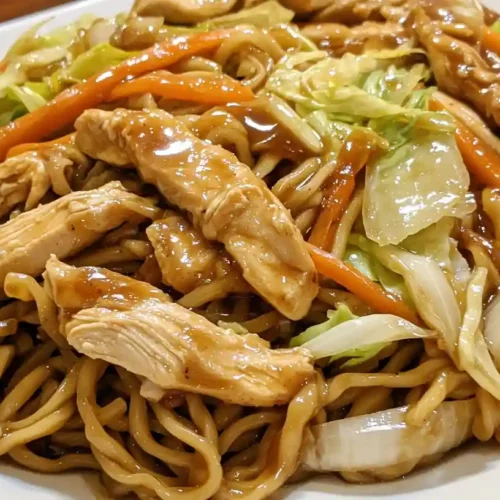
The Best Chicken Yakisoba Recipe: Easy 10-Minute Prep
Equipment
- Microwave-safe plate
- Large skillet (wok or griddle)
- spatula
- Tongs
- Individual plate
- Airtight Container
Ingredients
Main Ingredients
- 2 green cabbage leaves
- ¼ onion 3.5 oz, 100 g
- 4 inches carrot 2 oz, 60 g; bottom end close to the tip
- 1 boneless, skinless chicken thigh 5 oz, 142 g
- ⅛ tsp Diamond Crystal kosher salt
- ⅛ tsp freshly ground black pepper
- 1 Tbsp neutral oil
- 1 serving yakisoba noodles
- 1 serving yakisoba sauce
Instructions
Preparation
- Cut 2 green cabbage leaves into bite-sized pieces about 1-inch (2.5 cm) square.
- Slice ¼ onion into ¼-inch (6-mm) pieces.
- Cut 4 inches of carrot into 2-inch slabs, then julienne into 2-inch (5-cm) strips.
- Cut 1 boneless, skinless chicken thigh into ¾–1 inch (2–2.5 cm) squares using the sogigiri technique for even thickness.
- Season the chicken pieces with ⅛ tsp kosher salt and ⅛ tsp black pepper.
- Remove the wrapper from yakisoba noodles, place on a microwave-safe plate, cover with a damp paper towel, and heat for 30 seconds until warm, then gently loosen.
- Heat a large skillet, wok, or griddle on medium heat, add 1 Tbsp neutral oil when hot, then add chicken and onion in a single layer.
- Stir-fry with a spatula until the chicken is no longer pink (about 2 minutes), then add the cabbage and carrot, tossing to combine and allowing steam to evaporate.
- Cook until the vegetables are tender, then add the noodles, tossing with tongs to combine, allowing steam to escape, and frying until heated.
- Add 1 serving yakisoba sauce (from the noodle package or bottled/homemade) and toss to combine.
- Serve on an individual plate and enjoy.
- Transfer leftovers to an airtight container and store in the refrigerator for up to 3 days or in the freezer for a month; reheat in the microwave until warm, or thaw overnight if frozen.